
The Lichen Economy
Nature doesn’t do charity. It does reciprocity.
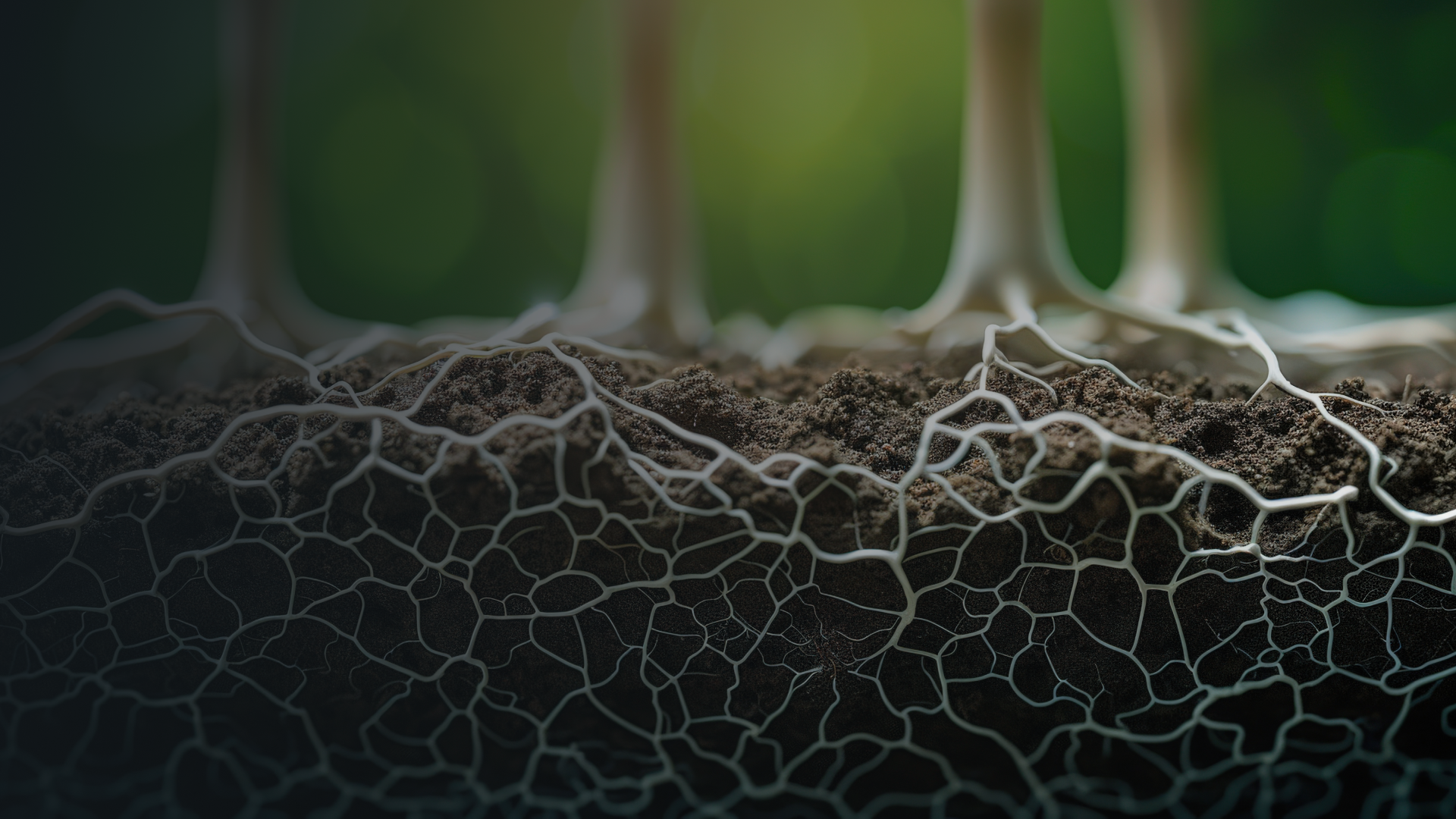
The shadow of conventional capitalism unconsciously behaves like a cancer — profiting from sickness until it devours its host. It extracts value, externalizes cost, quietly depending on dis-ease and dysfunction to survive. Lichen is built on the opposite premise: that a healthy economy should mirror the forest, where trees and mycelium collaborate by sharing information and resources — because the survival of each individual tree is inseparable from the health of the whole canopy.
We call this Universal Value Attribution — a system that tracks all contributions and all extractions, human and non-human, and facilitates reciprocity between every participant. Time, energy, knowledge, land stewardship, emotional labor, the work of a therapy animal, the medicine of a plant — all of it holds value, and all of it can be honored.
Two maps of the same world
Every economy is a network that fuels only what it can see, feel and value. The current one prices a mother’s care at zero, doesn’t count the life-sustaining contributions of an old-growth forest, underpays the paramedic and over-rewards speculation without real contribution. Lichen’s map draws every strand — and the gap between the two maps is exactly what the platform exists to close.
The Lichen economy
The current economy
A currency that remembers
The accounting layer beneath the ecosystem is the Universal Current-cy — the unit through which value is tracked and flows interchangeably between every participant. Crucially, it is pegged to the incumbent global economy. It isn’t a closed loop or a token that only matters inside our walls: value earned, contributed, or received within Lichen can be translated and exported into the wider world. Members can budget and coordinate their care, their work, and their exchanges both within the network and beyond it.
This is what lets the Care Model work in practice — your Kaleidoscope of Care is budgeted in the same terms you already live on, mapping cleanly to the mainstream medical and economic systems you navigate every day.
Why build an economy this way? Because epigenetics shows our cells respond to signals from their environment — including the political, economic, and cultural systems that shape our families and communities. A conscious economy isn’t only a moral project; it’s a biological one. When people are held in systems that honor and return their contributions, the body begins to heal.
And we’re realistic about the pace at which we can heal from the trauma of systems that have brokered real control over our safety and wellbeing for generations. Unconscious capitalism isn’t just economic policy — it influences the development of our nervous systems and helps program the way we think, feel, and act. Un-learning it and returning to genuine reciprocity and interdependence doesn’t happen overnight. Biological, human change happens slowly, through repetitive, corrective experiences that build trust in the safety and efficacy of new and better systems — systems that need a critical mass of humanity to enliven them. So Lichen bridges: we keep speaking fluent dollar — memberships, invoices, tax receipts, insurance — keeping every exchange legible to the world people rely on today, while the Current-cy grows strong enough to rely on tomorrow. The old economy is the scaffolding that keeps everyone safe while we build — and like all good scaffolding, its purpose is fulfilled the day it’s no longer needed.
The algorithm behind the mycelium, explained
Its job is simple to state and lifelong to build: audit the imbalance between our current economy and the real exchange of value among humans, plants, animals, elements, and land; route what’s needed to where the gap is largest; and bring the story back to the giver, so they can feel the difference they’ve made in the reciprocity web.
Inside Lichen, gifts, trades, fair sales, and in-search-of asks already flow through one marketplace. The next layer — being built now — connects seeker and offer the moment they match. This is where silicon-based intelligence will shine: surveying the whole network to find the most efficient, most generous exchange. And until trust is earned between the organic architects and the silicon builders, every entrusted offering is reviewed by a human steward.
There are no ratings to farm and no follower counts to perform for: what you see is filtered through the people you actually trust, and a path through real relationships can’t be faked.
The Shadow Clause
Healing doesn’t mean erasing the shadow inherent in the natural world. The mycelium itself isn’t purely altruistic — it builds dependency through indispensability, a natural monopoly earned rather than forced. Separation, competition, and limits are part of the curriculum of being alive in a dual realm. A healthy ecosystem doesn’t pretend these forces away; it holds them consciously.
So the Lichen economy carries a Shadow Clause — an acknowledgment that every system has a shadow, and a commitment to name it and build accountability around it. What doesn’t metabolize its shadow eventually becomes it.
And the deepest shadow of all is the savior story. No philanthropist, physician, founder, or technology is coming to save us — and any system that teaches you to wait for one is reproducing the very dependency it claims to heal. Every healer knows the harder truth: no one can do your healing for you, and no one needs to — because with proper resourcing and support, you hold awesome power to heal yourself and grow into your highest potential. So membership here is a stake, not a subscription: $29 a month for the utility of community, $99 a month for Concierge care built to grow into a real alternative to a system that isn’t working — each payment a monthly vote that you are the one saving you. Lichen is only the architecture and the infrastructure. The movement is people — and movements run on two currents: the many who show up, and those with resources who fund the ground everyone stands on. Not saviors. Members who carry more seed. If that’s you, the door is open.
Why philanthropy is still needed
If the long-term solution is reciprocity, why operate a 501(c)(3) at all? Because the systems we inherited didn’t merely deny our interconnection — they profited from severing it, and the wounds are real. Philanthropy is the temporary scaffolding that holds people while the new floor is built beneath them. Lichen’s foundation pays only the gap — what insurance doesn’t cover, what organizations can’t absorb, what individuals can’t yet afford, what the current market won’t fund. No further.
Philanthropy here doesn’t buy influence — it buys reach and impact. Donated dollars close the gap until membership fees sustain the ecosystem. Where dollars land is never decided by sentiment or status. Today, human stewards apply our written criteria for Community and Care subsidies; as the mycelium’s algorithm learns and matures, silicon-based intelligence will survey the whole network to identify imbalances impartially and route resources where the gap is greatest — efficiently and transparently. Donors fill the well; Lichen identifies who is most in need of a drink.
This is corrective investment: targeted, efficient, and designed to become obsolete. Seed it here.
A new Renaissance
The closest historical parallel is the Renaissance — a moment when builders didn’t just create individual products, but invested in the cultural, intellectual, and spiritual infrastructure that made a new era possible. Lichen is building two things at once: a new business model and the living platform that carries it. The platform is the mycelium through which value flows; the economy ensures that nothing is wasted and everything is valued.
That’s not radical. That’s just how nature works.
Step inside it
The economy isn’t something you read about here — it’s something you join. Every member arrives through someone already here, and every new member’s first three months are a gift.